Therapeutic Approaches
Psychotherapy can be more than talking.
It can involve feeling, expressing, and reconnecting with yourself in ways that go beyond words.
In my practice, I use an integrative approach that draws on:
Creative Arts Therapy
Nervous System Mapping
Internal Family Systems (IFS)
Sessions are designed to support both emotional and physiological awareness, helping you notice patterns in your thoughts, feelings, and body responses. Rather than analysing experiences from a distance, we work experientially — engaging the mind and body together to build insight and understanding.
Find out more below.
A three tiered application
Nervous System Mapping
When you’re living with anxiety, your body is often reacting before your mind has a chance to catch up. Your nervous system is constantly responding to what feels safe or overwhelming, which can leave you feeling on edge, tense, or shut down.
In therapy, we gently learn to notice these body signals and work with them, rather than trying to push them away. This can help you feel steadier, safer in your body, and more able to respond to life with greater ease and choice.
Healing Arts Therapy
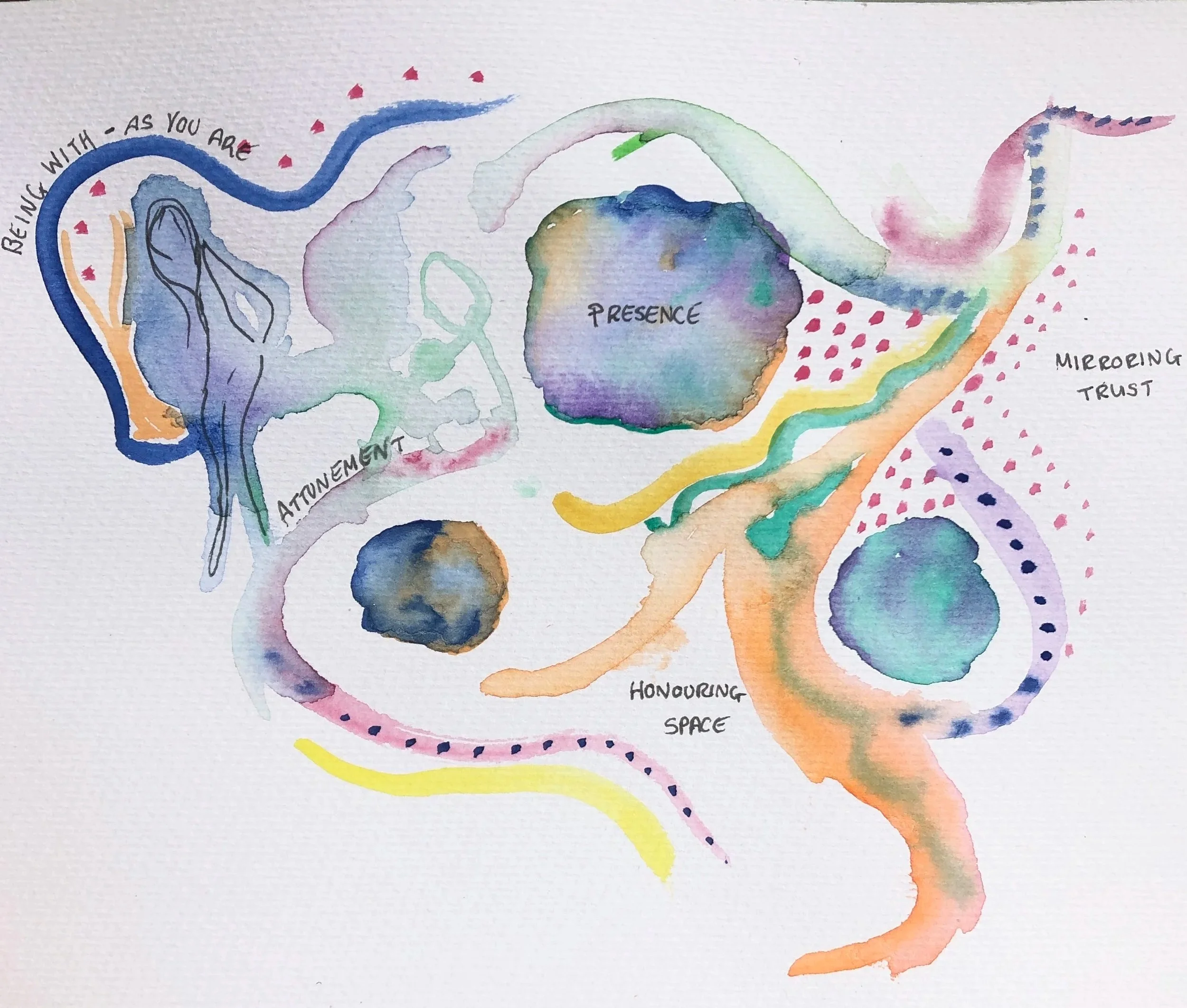
Have you ever felt, “I just can’t find the words”? Art therapy offers another way to express what can be difficult to put into language. The creative process can help you explore your inner world, make sense of experiences, and gain personal insight.
No artistic skill is needed — the focus is on expression, not perfection. Alongside the creative work, I guide a gentle process of reflection, where we explore what has emerged and how it relates to your experiences. This supports deeper understanding and helps integrate new awareness into everyday life.
IFS - Internal Family Systems
Despite the name, Internal Family Systems is not family therapy. It focuses on your inner world and the different parts of you that shape how you think, feel, and respond.
IFS recognises that we all have parts — protective parts that try to keep us safe, parts that carry pain or vulnerability, and a core Self that holds calm, compassion, and clarity. These parts develop for good reasons and are not problems to be fixed.
Through gentle, guided exploration, we learn to notice and understand these parts with curiosity rather than judgment. This process helps build internal trust, reduce inner conflict, and support meaningful change from the inside out.